Ancient Seafaring in the Philippines and Southeast Asia: A New Discovery
A recent study challenges the idea that early technological advancements in boat building and seafaring were limited to Europe and Africa. Researchers from Ateneo de Manila University, Riczar Fuentes and Alfred Pawlik, suggest that ancient peoples in the Philippines and Island Southeast Asia (ISEA) may have developed advanced maritime skills tens of thousands of years ago—much earlier than previously believed.
This discovery could reshape our understanding of early human history and their ability to navigate vast oceans.
Key Findings from the Study
Study Overview
- The research will be published in the Journal of Archaeological Science: Reports in April 2025.
- It examines evidence from various archaeological sites in the Philippines, Indonesia, and Timor-Leste, showing that these early seafarers were far more advanced than previously thought.
Main Discovery
- Contrary to the belief that early technological advancements only occurred in Europe and Africa, this study highlights that the peoples of ISEA were capable of advanced seafaring long before famous explorers like Magellan or Zheng He.
- ISEA was never connected to mainland Asia by land bridges, yet early humans managed to make daring ocean crossings.
Evidence of Advanced Seafaring Skills
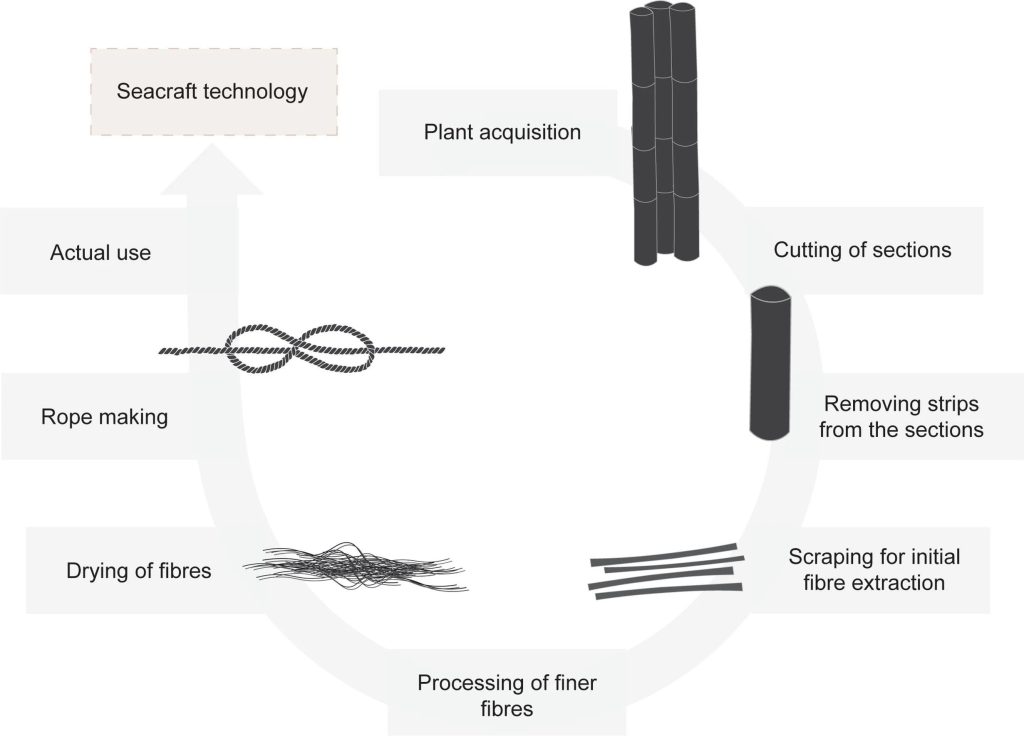
Microscopic Analysis of Tools
- Stone tools from sites dating back to around 40,000 years ago show traces of plant processing.
- This suggests these ancient people were using plants to make ropes, nets, and other essential materials for boat building and fishing.
Fishing Evidence
- Archaeological sites in Mindoro and Timor-Leste have revealed remains of large ocean fish like tuna and sharks.
- This points to deep-sea fishing skills and knowledge of the migration patterns of marine life.
- Fishing tools such as hooks, gorges, and net weights were also found, indicating the use of strong ropes for deep-sea fishing.
Implications for Ancient Maritime Technology
Sophisticated Boat Building
- The findings suggest these ancient peoples built advanced boats using organic materials, such as wood and plant fibers.
- The boats were likely strong and capable of long-distance travel over the open sea, not just simple bamboo rafts.
Skilled Navigators
- These ancient seafarers were not just drifting across the sea. They were highly skilled navigators, able to cross vast distances and reach remote islands.
Experimental Archaeology and the FLOW Project
Fieldwork in Ilin Island
- Fuentes and Pawlik’s fieldwork on Ilin Island in Occidental Mindoro inspired them to explore these ideas further.
- They began the First Long-Distance Open-Sea Watercrafts (FLOW) Project, in collaboration with naval architects from the University of Cebu.
- The project aims to recreate and test models of ancient seacraft, using materials similar to those likely used by early boat builders.
The Significance of These Findings
- This new research shows that early peoples in the Philippines and ISEA were pioneers in maritime technology, helping lay the foundation for the region’s rich maritime traditions today.
- Their boat-building expertise likely allowed these communities to explore and settle across vast distances in the open ocean.
Conclusion
The study by Fuentes and Pawlik challenges long-held beliefs about the limits of early technological development. The evidence they’ve uncovered shows that the ancient peoples of the Philippines and Southeast Asia were skilled seafarers, well ahead of their time.
References
- Fuentes, Riczar, and Alfred Pawlik. “Testing the waters: Plant working and seafaring in Pleistocene Wallacea,” Journal of Archaeological Science: Reports, 8 February 2025. DOI: 10.1016/j.jasrep.2025.105020.